
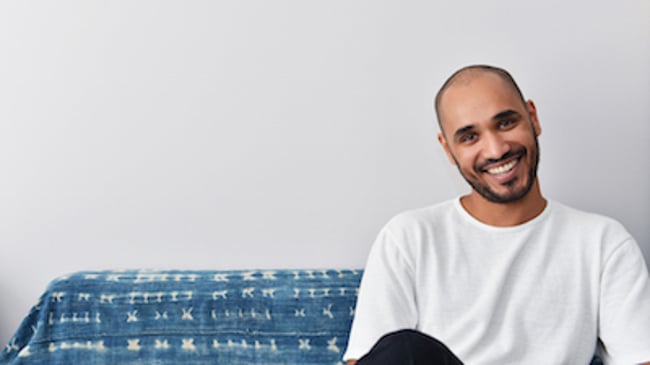
A day in the life of Dany Dembélé
Photos Louis Muller
Words Matthieu Morge-Zucconi
Share the article on
The commercial agent talks coffee, long-haul flights and Japanese Baxter of California rarity.
“I just got back from my holidays, and I’m really questioning my lifestyle”. We’re greeted by these words as Dany Dembelé opens the door to his flat, close to the Saint-Ouen flea market in Paris. We sat down with him to ask him a few questions and try to determine what impact this sudden bout of questioning will have on his daily routine.
LIKE WHAT YOU SEE? SIGN UP TO OUR NEWSLETTER
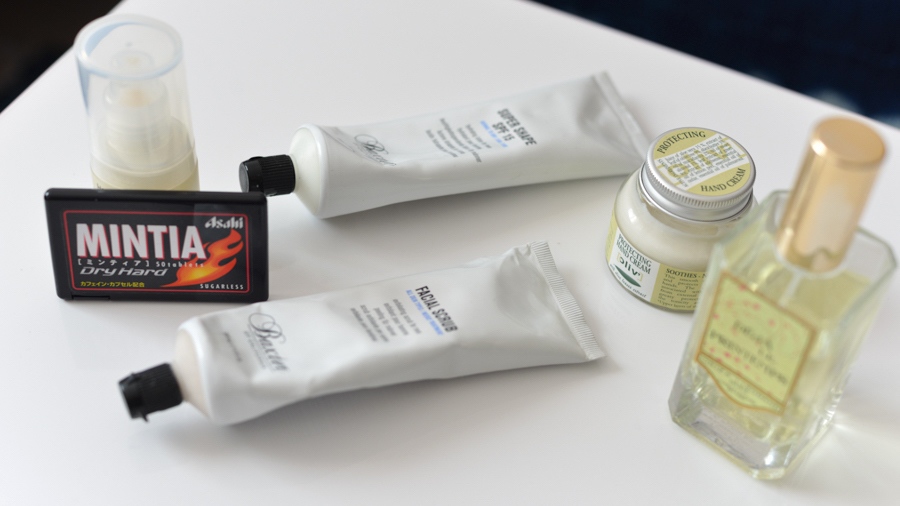
Dany Dembélé's morning routine products
Hello Dany, can you introduce yourself?
I’ll keep it short and sweet, my name is Dany Dembelé and I am 29 years old.What do you do for a living?
I’m a go-between of sorts, linking Japan to the rest of the fashion world and vice-versa. I find brands - often French ones - that could be exported to Japan, and Japanese brands that could be exported to the rest of the world. I’m kind of like a commercial agent: I help small companies expand their marketing and commercial scope.How did you start off working in this area?
By chance, to be honest. I spent some time in Tokyo for my studies. In Japan, if you’re a foreigner, not too small and on the thin side, you can easily become a model, which is what happened to me. While modelling, I met the person who represented Wings + Horns - a Canadian brand - in Japan. I then headed back to France to finish my Asian languages and civilisations degree in Paris, and he asked me to come work for Paddle, his agency which imported fashion brands to Japan. We would distribute brands such as Homecore and Thom Browne. It was a very small company so I quickly given more responsibilities, among which I was put in charge of finding new brands. For example, I worked for Béton Ciré, a headwear company which is now sold at Colette and the Bon Marché in Paris.
Did your studies in Japan help in your day-to-day work?
Of course. First off, I already spoke Japanese, which always helps when you’re trying to work in the country. While I was studying there I also worked different jobs, I waited tables, I worked in big companies… I learnt so much about their mentality and way of life. It’s a very codified country and culture. For example, there are some clothing items the Japanese can’t wear. There are also specific rules to business relations.You recently returned to Paris to live. How did that happen?
A year and a half after having started working for Paddle, I returned to Paris, bringing a Japanese brand called Mikia with me. Mikia is an accessory brand, which sells, in particular, bracelets. This was right at the beginning of the boom of such menswear accessories. When I got back from Japan I had offers from renowned brands, but also luxury houses, to work in offices handling Japanese business. I wanted to try going solo, and was lucky enough to find the right brand at the right time. It turned out to be the right choice. In a big fashion brand, I would only have been a cog in their massive international sales machine. In my current position I can really help brands find their audience and grow. It’s very exciting and rewarding.
So you still work closely with the Japanese market.
During my first year back in Paris, I made 7 trips to Japan, staying for 2 weeks to 1 month each time. I always need to go back regularly. Japan is a sort of trend incubator. Things that are completely mainstream over there will take two years to reach the same level in France. For example, the French shoe brand Paraboot is experiencing a comeback right now which originated from Japan. A few years ago only History teachers would be caught wearing a pair of Paraboots, and now they’re much more popular.Where is your office located in Paris?
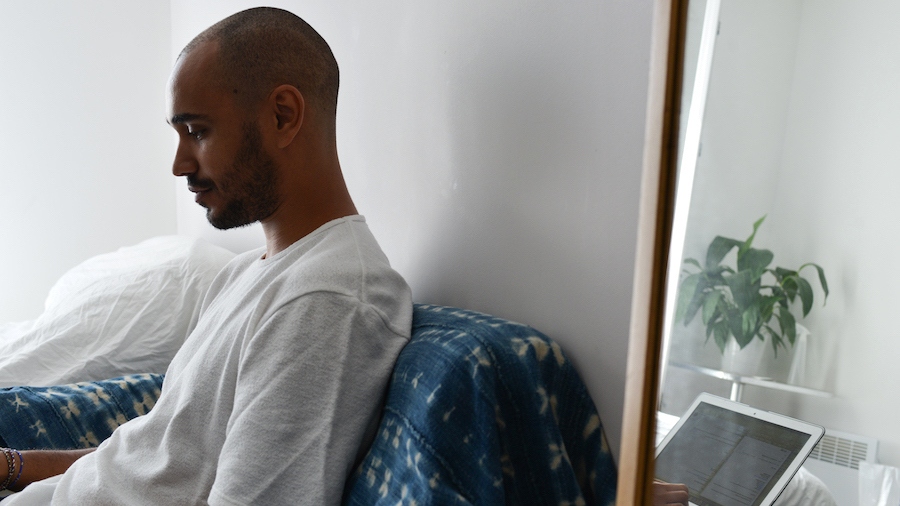
In the 17th arrondissement, on the rue des Dames. It’s an office I share with a concept store called Noyoco for which I do some consulting. I have no real obligation to show up at the office, I only ever go when I really need to. I’m a bit of a homebody, so anything I can do alone here, I will. I often work from my settee, with my feet up on the table and my laptop on my legs!
What does one of your typical workdays look like?
All depends of the time of year really. Fashion weeks are obviously much busier, as I have to meet with plenty of clients. Normally, I try to often eat with industry people. I talk about work a lot, really, but it’s necessary. In my line of work, it is crucial to stay on top of the latest trends and developments, so talking shop all the time tends to be beneficial. After lunch I go back to work until 8pm-ish. Sometimes until 10pm.
Do you manage to ever switch off from work?
Not really. I’m constantly getting emails, at all times of the day and night. When one side of the world is going to bed, the other is getting up, and so on. I rarely take time off, and even when I do, I stay connected to my emails, as it’s really essential.I would imagine that your work hours are flexible, if you don’t have to show up at the office at set hours.
Indeed. I’m not a morning person. I wake up between 8:30 and 9am based on the day’s workload and what I did on the previous night. I primarily work from my flat, mostly managing emails, which I get a never-ending flow of as I work both with Japan and the US, so over multiple time zones. If I go to the office, I never show up before 1pm. I ride my scooter there.What is the first thing you do when you get up?
I drink a tall glass of water. One of my friends recommended it. I originally though it simply provided a placebo effect, but it really does help to feel better when you wake up and feel dehydrated. Straight after that, I take a shower.What grooming products do you use for your morning routine?
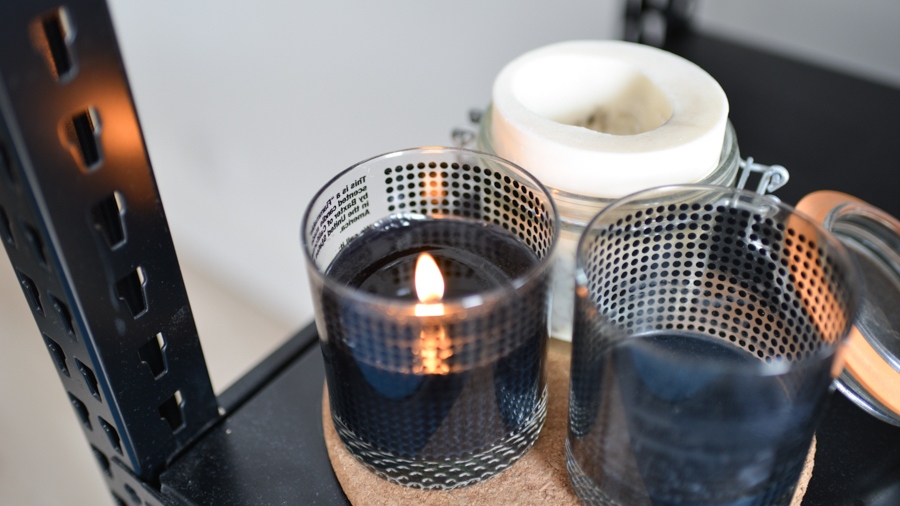
As a teenager I got into the habit of taking care of my skin to avoid spots. I used to use Aésop products but I’ve since switched to Baxter of California. I was initially drawn by their great packaging and wanted to try their products, which - it turns out - are excellent. I never switched back. I use the Facial Scrub once a week, with a moisturising cream I buy in Japan. I have plenty of Baxter products, including candles!
You use the Supershape SPF15 lotion. It was the first product Baxter of California ever created. Were you aware they don’t make it anymore?
Yes, unfortunately. I have a bit of stock, though. This lotion is highly moisturising, which is absolutely necessary for me as I have very dry skin due to my mixed heritage. When I eventually run out, I’ll probably start using the Oil Free Moisturizer. As regards my other grooming products, I use an eye contour cream from Ho Karan, a brand from Brittany, and I’ve worn the same perfume for the past two years.
I’ve never seen this perfume brand before, can you tell me more?
It’s a brand called Oriza L. Legrand. I walked by their store on rue Saint Augustin one day, and decided to enter. They were one of the French Kings’ official perfume providers, and they only create historic fragrances which they update a little. The brand disappeared in the 1930s but was bought up and today their products are made in France. The perfume I wear is called “Déjà le printemps”.What do you have for breakfast?
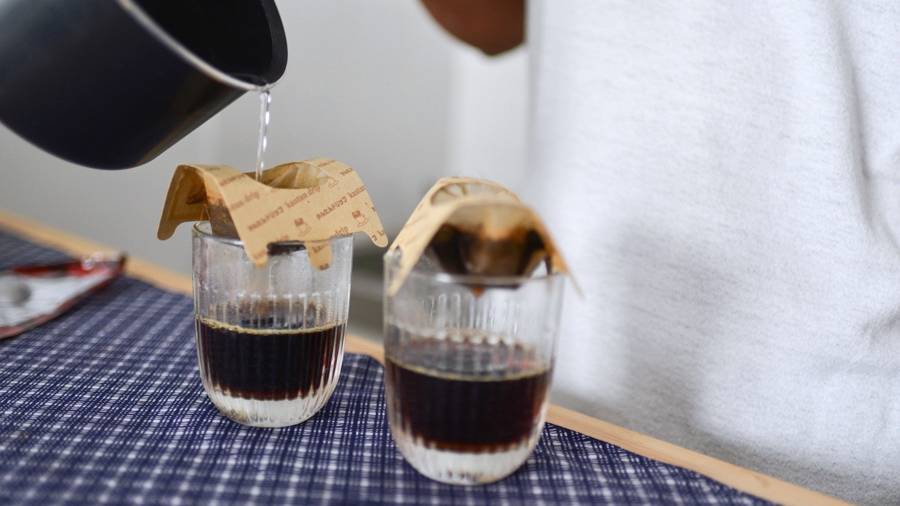
A Japanese-style coffee - i.e., poured through a filter directly above the cup - and a fruit. They all brew their coffee like that other there, even at the office!